Same story. Same magic. Two completely different names. Here’s the real reason why.
I still remember the day my cousin called me from New York, completely confused. “Why does your Harry Potter book say Philosopher’s Stone?” she asked. “Mine says Sorcerer’s Stone.” We literally argued about it for twenty minutes thinking one of us had a fake copy. Turns out 3we were both right.
Same story, same Hogwarts, same Harry. Just two completely different titles. And the reason behind this change? Way more interesting than you would ever expect.
Today we are diving into the real story behind the Philosopher’s Stone vs Sorcerer’s Stone differences what these names actually mean, every change between the two editions, and which version you should have on your shelf.
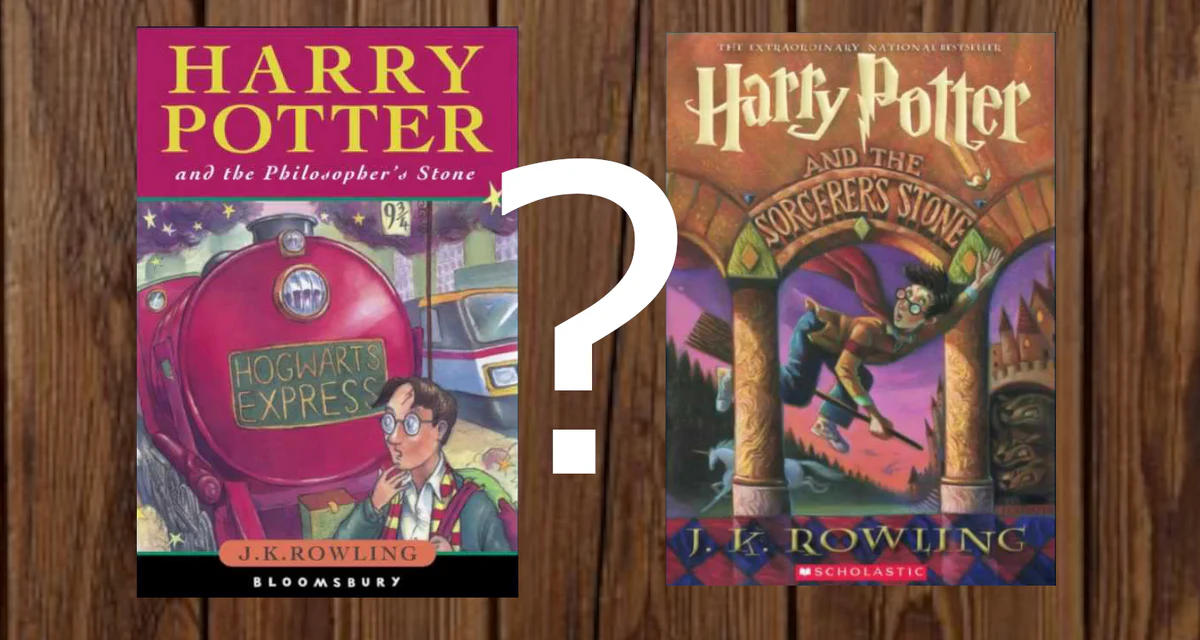
United Kingdom · 1997
Harry Potter and the Philosopher’s Stone
Published by Bloomsbury. J.K. Rowling’s original title. The version the world first fell in love with.
United States · 1998
Harry Potter and the Sorcerer’s Stone
Published by Scholastic. Renamed for the American market. Over 107 million copies sold in the US alone.
What Is a Philosopher’s Stone — And Why Does It Matter?
Before we even talk about the name change, we need to understand what a Philosopher’s Stone actually is. Because here is the thing J.K. Rowling did not make this up.
The Philosopher’s Stone is a real piece of history. For hundreds of years, alchemists across Europe were obsessed with finding it. According to legend, this mysterious substance could do two extraordinary things: turn any ordinary metal into pure gold, and produce the Elixir of Life a potion that granted immortality.
Sound familiar? That is exactly what Voldemort is chasing in the book. So when Rowling named her story after the Philosopher’s Stone, she was connecting Harry’s world to real historical legend a legend European readers would immediately recognize and feel the weight of.
The Real Nicolas Flamel — History Hidden Inside the Story
There was even a real alchemist named Nicolas Flamel yes, the same Nicolas Flamel mentioned in the book who was a 14th century Frenchman many people believed had actually discovered the stone. He is a real historical figure. Rowling just borrowed him and made him immortal in fiction too.
That is the kind of depth the original title carries. It is not just a name it is a doorway into centuries of real human obsession with immortality and gold.
Alchemy Was Taken Very Seriously for Centuries
Medieval alchemy was considered a legitimate science. Some of history’s greatest minds including Isaac Newton spent years studying it. Rowling tapping into this tradition gave her story roots far deeper than most readers ever realize.
Why Did America Change Harry Potter’s Title?
In 1997, Bloomsbury released Harry Potter and the Philosopher’s Stone in the UK. It sold modestly at first nobody had any idea it was about to become the biggest book series in human history.
Then Scholastic, a major American publisher, bought the rights to publish it in the United States. And before they printed a single copy, they went to J.K. Rowling with one request: change the title.
The Problem With the Word “Philosopher”
Their reasoning was simple and honestly a little funny in hindsight. They were worried that American kids would see the word “philosopher” on the cover and immediately think: boring. In the US, a philosopher is someone who sits in a university office thinking deep thoughts about the meaning of existence. Not exactly the energy you want for a children’s adventure book.
“Sorcerer’s Stone” though? That is exciting. That is mysterious. That is magical. A kid standing in a bookstore sees the word “sorcerer” and their imagination immediately starts running wild.
Scholastic believed that one single word “philosopher” could make American kids put the book back on the shelf without ever opening it.
Publishing Industry Decision, 1997
J.K. Rowling’s Regret Over the Title Change
So Scholastic made the call. And J.K. Rowling who was a completely unknown first-time author at this point, just desperate to see her book succeed agreed to it.
She later said she regretted not fighting harder to keep the original title. In interviews she has admitted that “Philosopher’s Stone” carries so much more historical and thematic weight. The whole story of alchemy, of the search for immortality, of what people sacrifice chasing eternal life all of that is baked into those two words.
“Sorcerer’s Stone” is exciting. But “Philosopher’s Stone” is meaningful. And here is the irony the book became one of the best-selling novels in American history anyway. Over 107 million copies sold in the US alone. Whether the title change helped? We will never really know.
Philosopher’s Stone vs Sorcerer’s Stone: Every Difference Explained
Now here is something most people do not realize the title was not the only thing Scholastic changed. When they decided to Americanize the book, they went through the entire manuscript and swapped out British English words for American ones. The Harry Potter American version vs British version differences go much deeper than just the cover.
Title and Internal Text Changes
Because the title changed, every single internal mention of “the Philosopher’s Stone” throughout the book also had to become “the Sorcerer’s Stone.” That phrase appears over 20 times in the text meaning this was a far bigger editorial job than just swapping words on the cover.
British English vs American English — Full Breakdown
Here is every vocabulary change Scholastic made inside the book:
| Category | 🇬🇧 UK Edition | 🇺🇸 US Edition |
| Book Title | Philosopher’s Stone | Sorcerer’s Stone |
| Clothing | Jumper | Sweater |
| Parent Term | Mum | Mom |
| Snack | Biscuits | Cookies |
| Vehicle | Motorcar | Car |
| Sport | Football | Soccer |
| Tape | Sellotape | Scotch Tape |
| Breakfast | Crumpets | English Muffins |
| Sweets | Sweets | Candy |
| Cover Art | Thomas Taylor | Mary GrandPré |
The Cover Art Difference Nobody Talks About
This is a big one most people overlook. The UK edition features artwork by Thomas Taylor showing Harry at the Hogwarts Express. The US edition has the now-iconic Mary GrandPré illustrations the ones that defined the look of Harry Potter for an entire generation of American readers. Two completely different visual identities for the exact same story.
Harry Potter American Version vs British Version — Which Should You Read?
Okay, real talk this is the question everyone really wants answered. And here is my honest take.
Read the UK Edition for the Original Experience
If you want the authentic experience that J.K. Rowling actually wrote and intended, read the British edition. The original text has a very specific, charming Englishness to it. The way characters speak, the cultural details, the food they eat it all adds up to a world that feels distinctly and wonderfully British. And “Philosopher’s Stone” as a title connects the whole story to centuries of real historical legend in a way the American title simply does not.
Read the US Edition If You Grew Up With It
If you grew up with the US edition or you are reading it to American kids who might stumble over British slang the Scholastic edition is genuinely wonderful. Mary GrandPré’s artwork is gorgeous. And for millions of American readers, this version IS Harry Potter. It is what they grew up with, what they fell in love with, what they passed on to their own children.
The Original Title Tells a Richer Story
From a literary standpoint, “Philosopher’s Stone” connects the book to real alchemical history in a way “Sorcerer’s Stone” simply does not. But both versions deliver the exact same magical experience that has captivated readers for nearly 30 years.
Frequently Asked Questions
Is Philosopher’s Stone and Sorcerer’s Stone the same?
Yes, both are the same book. Only the title and some words are different.
Did J.K. Rowling regret the title change?
Yes, she said the original title had deeper meaning and she preferred it.
Who changed the title in the US?
The US publisher Scholastic decided to change it for American readers.
Are other Harry Potter titles different?
No, only the first book has a different title.
Which first edition is more valuable?
The UK first edition is much more valuable than the US version.
What is the Philosopher’s Stone in alchemy?
It is a legendary substance believed to turn metals into gold and give immortality.
Final Thoughts
Here is what I keep coming back to when I think about this whole Philosopher’s Stone vs Sorcerer’s Stone debate. One publisher, one editorial meeting, one decision to swap a single word and it sparked a conversation that Harry Potter fans are still having almost 30 years later.
The British version respects the history and the original craft of what Rowling wrote. The American version reached millions of children who grew up making it their own. Neither version is wrong. Both versions changed lives.
And at the end of the day whether the spine of your copy says Philosopher’s Stone or Sorcerer’s Stone it still opens the same door to the same magical world. That is the part that was never going to change.