I want to be honest with you about something before we get into this.
Most founders write about why they are building capabilisense in a way that sounds polished and inevitable. Like they woke up one morning with a perfectly formed vision, drew it on a whiteboard and the product practically built itself.
That is not how this happened.
Building capabilisense started with frustration. Real, specific, deeply personal frustration with a problem I kept watching destroy good companies from the inside. Not bad strategy. Not bad people. Not bad intentions. A problem that goes deeper than any of those things and one that almost nobody in the technology space is talking about seriously.
This is the real story behind the capabilisense vision.Where it came from what it is trying to do and why I believe it matters more in 2026 than almost anything else being built right now.
The Pattern I Could Not Stop Seeing

Over the last several years I have worked alongside founders, product teams, and leadership groups across companies at very different stages. Some were just getting started. Some were scaling fast. Some were preparing for significant funding rounds. Some were trying to understand why growth had stalled after a promising start.
Different industries. Different sizes. Different problems on the surface.
But underneath the same pattern kept appearing.
Leaders drowning in data but unable to make clear decisions with it. Departments optimising their own metrics while the organisation as a whole moved sideways. Teams being pushed to deliver outcomes that their actual operational capacity simply could not support. And the worst part nobody could see it clearly enough to name it let alone fix it.
The problems capabilisense aims to solve did not start as a list of product requirements. They started as a feeling I could not shake after watching the same failure mode repeat itself in company after company. Brilliant people. Real ambition. And a structural blind spot that was quietly making their best efforts less effective than they should have been.
That feeling became a question. That question became a conviction. And that conviction became the capabilisense project.
What Was Actually Going Wrong
Here is the specific thing I kept observing and it took me a while to articulate it clearly enough to do something about it.
Companies have enormous amounts of data about what has happened. Revenue figures. User growth numbers. Churn rates. Operational costs. Performance dashboards covering every metric imaginable. Modern organisations have never had more information about their own performance than they do right now.
And yet the question that matters most to founders preparing for the next stage of growth “are we actually capable of doing what we are planning to do?” almost never gets answered with anything more reliable than instinct and optimism.
Strategy gets set based on where leadership wants to go. Then the team tries to execute against that strategy. And then somewhere in the execution, things break in ways that nobody predicted because nobody had a clear, honest picture of what the organisation was actually capable of doing at that moment in time.
Engineering blamed product priorities. Product blamed unclear strategy. Operations cited resource constraints. Everyone had data. Nobody had alignment.
The purpose of creating capabilisense grew directly out of watching that misalignment play out over and over. Strategy without capability awareness is not bold ambition. It is expensive guesswork.
The Moment the Idea Crystallised
There was one specific moment when the idea behind capabilisense stopped being a vague frustration and became something I knew I had to build.
I was working with a growth-stage company that had strong revenue momentum and genuine market traction. From the outside, everything looked promising. From the inside, execution was repeatedly breaking down in ways that were damaging team morale burning investor confidence and consuming leadership bandwidth that should have been going toward growth.
When we sat down and properly mapped the organisation’s actual capabilities technical infrastructure, talent distribution, workflow maturity, process depth, automation readiness something changed in the room. Leaders who had been frustrated with each other started seeing something different. Not personal failures. Not department failures. Structural gaps. Systemic misalignments between what the company was asking itself to do and what it was genuinely built to handle at that point in its development.
The noise did not disappear overnight. But it got quieter. And in that quiet better decisions started getting made.
That experience planted the seed of the capabilisense platform in a way that nothing else had. I did not want to build another analytics tool. I wanted to build the thing that had happened in that room the moment of structural clarity into something that any organisation could access at any time.
What CapabiliSense Actually Is
Let me explain the capabilisense project in plain terms rather than product marketing language.
CapabiliSense is a decision intelligence platform. But that description needs unpacking because decision intelligence has become one of those phrases that gets attached to almost anything with a dashboard.
What makes capabilisense different is its focus. Most analytics platforms tell you what happened.They measure outputs. Revenue. Traffic. Conversion rates. Engagement metrics. All of that is useful for understanding the past.
CapabiliSense focuses on something different what your organisation can reliably do right now. Not what it did last quarter. Not what the projections say it should be able to do next quarter. What it is genuinely structurally prepared to execute today.
Think of it as an internal radar system. It continuously maps functional strength, adaptability and execution readiness across the organisation. It connects capabilities to outcomes rather than just tracking performance against targets. And it gives leadership the kind of honest, structured picture of organisational readiness that most companies currently get only through painful experience.
How capabilisense will help people comes down to one fundamental shift moving from “what are we trying to achieve” to “are we structurally prepared to achieve it.” That shift sounds subtle. Its practical consequences are enormous.
Who CapabiliSense Is For
Who is capabilisense for is a question worth answering directly.
The founders I think about most when I am building this are the ones operating under the kind of pressure that makes clear thinking genuinely difficult. Funding cycles that move fast. Market expectations that move faster. Teams that are talented and motivated but stretched thin. And decisions that have to be made constantly, often with incomplete information in environments where the cost of getting it wrong is high.
These founders are not failing because they lack intelligence or ambition.They are failing when they fail because they are making strategic decisions without a reliable picture of their own operational capacity. They are building plans on assumptions rather than on structured capability awareness.
CapabiliSense is built for them. For the founder who wants to stop responding to execution breakdowns after they happen and start seeing them coming early enough to do something about it. For the leadership team that wants its strategy conversations to be grounded in honest capability assessment rather than departmental optimism. For the organisation that is preparing to scale and wants to know really know whether it is ready.
It is also being built for the investors and boards who ask hard questions about scalability and get spreadsheets in response when what they actually need is structural evidence of execution readiness. CapabiliSense changes what that conversation looks like.
The Problems This Platform Is Designed to Solve
What problem does capabilisense solve is the question that gets me out of bed in the morning.
The first problem is the capability blind spot. Most organisations have no systematic way of understanding their own execution capacity. They know their revenue targets. They know their headcount. They know their product roadmap. But they do not have a clear, continuously updated picture of the structural capabilities that determine whether any of those plans are actually executable. CapabiliSense provides that picture.
The second problem is misalignment between strategy and capacity. Leadership sets direction based on market opportunity and growth ambition. That is correct and necessary. But direction without capacity alignment produces the execution breakdowns I described earlier teams working hard in the wrong directions, resources deployed against problems the organisation is not yet equipped to solve ambition running ahead of readiness. CapabiliSense closes that gap.
The third problem is reactive decision-making. Most organisations discover capability gaps through failure a product launch that breaks the engineering team a scaling initiative that overwhelms operations a funding round that reveals structural weaknesses at exactly the wrong moment. CapabiliSense makes those gaps visible before they produce failures rather than after.
The fourth problem is the blame culture that emerges when capability gaps are invisible. When teams are consistently pushed beyond their structural capacity and nobody can clearly see why execution is breaking down, the instinct is to find someone responsible. CapabiliSense replaces that dynamic with systemic insight. Capability gaps become things to address rather than people to blame.
Why 2026 Is the Right Moment for This
Why I am building capabilisense in 2026 rather than at any other time is not a coincidence.
The pressure on founders and leadership teams has never been higher. AI tools are proliferating faster than most organisations can meaningfully integrate them. Remote and hybrid work has changed how capability is distributed and how it gets assessed. Funding environments have made execution credibility more important than it has been in years.
And at the same time the tools available for decision intelligence have matured to the point where building capabilisense the way I want to build it as a genuinely intelligent, continuously adaptive capability mapping system is now practically achievable in ways it was not even three years ago.
The timing is right. The need is real. And the technology exists to build something that actually works.
But the deepest reason for building this now is simpler than any of those factors. I have watched too many good companies underperform or fail not because of bad strategy or bad people but because of a structural blind spot that nobody helped them see clearly. I am not willing to keep watching that happen when I know what needs to be built to prevent it.
The Human Side of This Project
I want to say something that does not usually make it into founder essays about why they are building their products.
My journey building capabilisense has been shaped as much by watching people burn out as by watching companies fail.
When organisations consistently push teams to deliver outcomes beyond their structural capacity it is not just the company that suffers. It is the people. Talented, committed, genuinely motivated people who work extremely hard and still cannot produce the results being asked of them because the structural environment they are working in makes those results impossible regardless of individual effort.
That experience is demoralising in a way that leaves real marks. I have seen it happen to people who did not deserve it and could not have prevented it. And one of the things I most want capabilisense to do is reduce the frequency of that experience.
When capability gaps are visible and understood, expectations can be calibrated to reality. Work becomes challenging rather than impossible. Success becomes achievable rather than perpetually out of reach. And the people doing the work get to experience the motivation that comes from being stretched appropriately rather than the demoralisation that comes from being asked for the impossible.
That matters to me. It is part of why I am building capabilisense that I will not leave out of this story.
How CapabiliSense Will Work in Practice
How capabilisense will work is something I want to explain in practical terms rather than abstract ones.
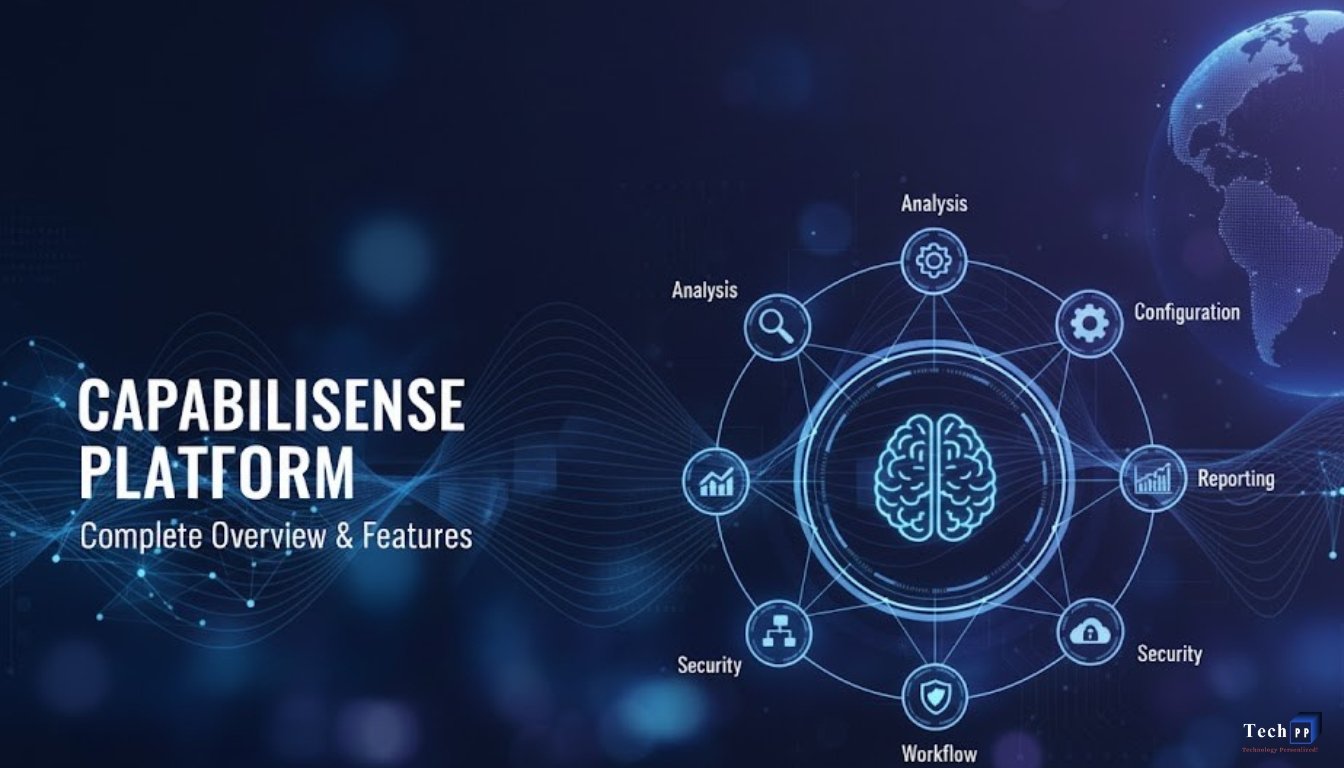
The platform integrates operational data, team metrics, workflow signals, and infrastructure health indicators into a continuous capability index. This index gives leadership a real-time picture of organisational readiness across the dimensions that actually determine execution quality technical infrastructure, talent distribution, workflow maturity, automation depth, process scalability.
For founders preparing for a funding round, this means being able to present something more compelling than growth projections. It means presenting a capability readiness map that shows investors not just where you are going but why your organisation is structurally prepared to get there. That changes the nature of investor conversations in ways that matter at every funding stage.
For leadership teams making strategic decisions, it means being able to ask “are we structurally prepared for this?” before committing resources rather than discovering the answer through execution failure six months later.
For operations and product teams, it means having a shared, honest picture of organisational capacity that reduces the departmental blame dynamics that emerge when nobody can see the structural causes of execution breakdowns.
The Long-Term Vision for CapabiliSense
Future goals of capabilisense platform extend well beyond what we are building in the first iteration.
The long-term vision is a world where capability accounting becomes as standard and as expected as financial accounting. Where investors routinely ask for capability readiness maps alongside financial projections. Where boards maintain ongoing visibility into organisational execution capacity the way they maintain ongoing visibility into financial performance. Where founders have access to the same quality of structural intelligence that the most sophisticated enterprises have historically been able to build through years of accumulated institutional knowledge.
CapabiliSense is my contribution to moving toward that world. I believe it is coming regardless the question is how quickly and how well the tools that enable it get built.
I intend to build them well.
What I Have Learned So Far
The story behind building capabilisense is still being written. We are in early stages. The framework is being tested against real-world growth milestones. Capability scoring models are being validated against actual execution outcomes. Every conversation with founders, CTOs, and operations leaders adds something that changes how we think about the problem and the solution.
What I have learned so far is that the problem is even more widespread than I initially understood. Almost every serious operator I talk to recognises the capability blind spot immediately not as an abstract concept but as something they have personally experienced and suffered through. The demand for a solution is not something we need to manufacture. It is already there. We just need to build the right thing to meet it.
I am also learning that benefits of capabilisense technology go beyond what I originally anticipated. The platform is not just helping leadership make better strategic decisions. It is changing how teams talk about their work. It is reducing the kind of inter-departmental friction that makes organisations genuinely exhausting to work in. It is giving founders a new kind of confidence in their own decision-making not false confidence, but confidence grounded in honest structural awareness.
That is more than I hoped for when I started. It keeps me building.
CapabiliSense FAQs Your Questions Answered
Why am I building CapabiliSense?
Building capabilisense came from years of watching great companies underperform not because of bad strategy or bad people but because of a structural blind spot nobody had a clear, honest picture of what the organisation was actually capable of executing at any given moment.
What is CapabiliSense about?
The capabilisense platform is a decision intelligence system that continuously maps organisational capability functional strength, execution readiness, and adaptability so that strategy can be aligned with structural reality rather than optimistic assumption.
What problem does CapabiliSense solve?
Problems capabilisense aims to solve include the capability blind spot, misalignment between strategy and operational capacity, reactive rather than predictive decision-making and the blame culture that emerges when structural gaps are invisible.
Who is CapabiliSense for?
CapabiliSense is built for founders, leadership teams, and operators who need honest structural intelligence to make better decisions particularly those preparing to scale, approaching funding rounds, or trying to understand why execution keeps breaking down.
How will CapabiliSense work?
The capabilisense platform integrates operational data, team metrics, workflow signals, and infrastructure health indicators into a continuous capability index that gives leadership a real-time picture of organisational execution readiness.
What are the future goals of the CapabiliSense platform?
The future goals of capabilisense platform include making capability accounting as standard as financial accounting a routine part of how investors assess companies, how boards monitor organisations, and how founders make strategic decisions.
The Honest Bottom Line
Here is what I want people to take from this explanation of why I am building capabilisense.
I am not building another analytics dashboard. I am not building another AI tool that promises to automate everything and solve nothing. I am building something specific a platform that gives organisations the structural self-awareness they need to align ambition with genuine capacity.
The companies that are going to perform best over the next decade are not going to be the ones with the most data. They are going to be the ones with the clearest understanding of what they can actually execute. Data about the past is everywhere. Honest structural intelligence about the present is rare.
CapabiliSense exists to make that intelligence accessible. Not just for the largest enterprises with the resources to build their own internal capability frameworks, but for every serious founder and operator who deserves to make decisions on honest ground rather than optimistic assumption.
That is the vision behind the idea. That is why I am building this.